Bamboo — A Versatile Natural Material
Introduction
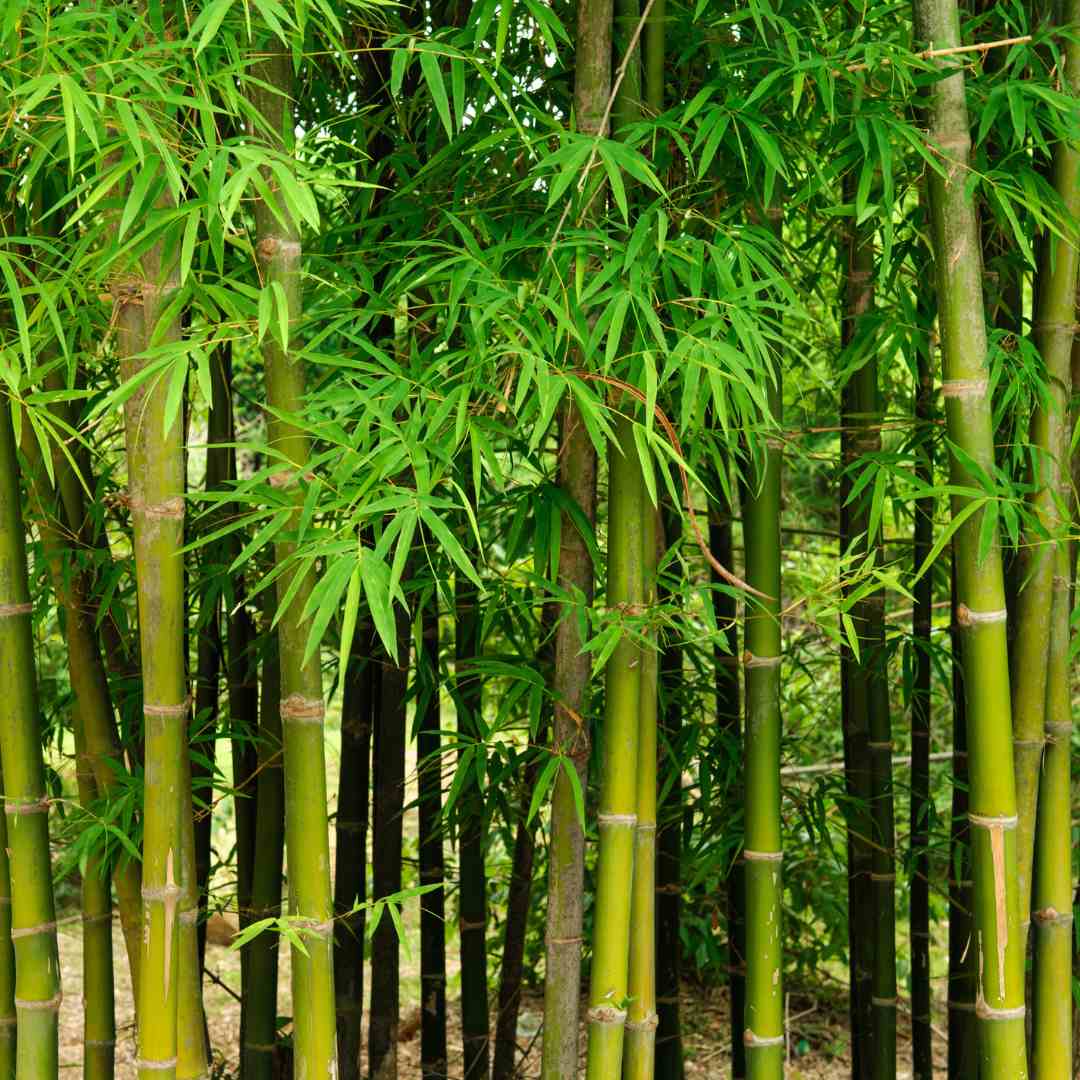
Bamboo is a fast-growing, strong and flexible grass with a hollow, jointed stem called a culm.
It is found mainly in tropical and subtropical regions and has been used for centuries in construction, furniture, crafts and everyday products.
Bamboo grows quickly and can be renewed, making it a
sustainable material when harvested and managed responsibly.
Where is it found
Bamboo is naturally found in warm and humid regions around the world.
It grows mainly in tropical and subtropical areas, where there is plenty of rainfall and suitable soil.
Countries such as India, China, Japan, Indonesia, Brazil and parts of Africa have large bamboo-growing regions.
In India, bamboo is widely found in the Northeastern states, West Bengal, Madhya Pradesh, Maharashtra and Kerala. It grows in forests, hills, riverbanks and other areas with favourable climatic conditions.
Why bamboo?
Bamboo is chosen as a material because it is
strong, lightweight, flexible and fast-growing.
It can be easily shaped into different forms and is used to create furniture, buildings, baskets, lamps and decorative products.
Its natural appearance also adds a warm and unique look to interior spaces.
Properties
Bamboo is
strong, lightweight, flexible and durable.
It has a smooth natural texture, is easy to cut, shape, bend and weave, and can be used in many different forms.
It is also renewable and fast-growing, making it a useful material for sustainable design.
Types
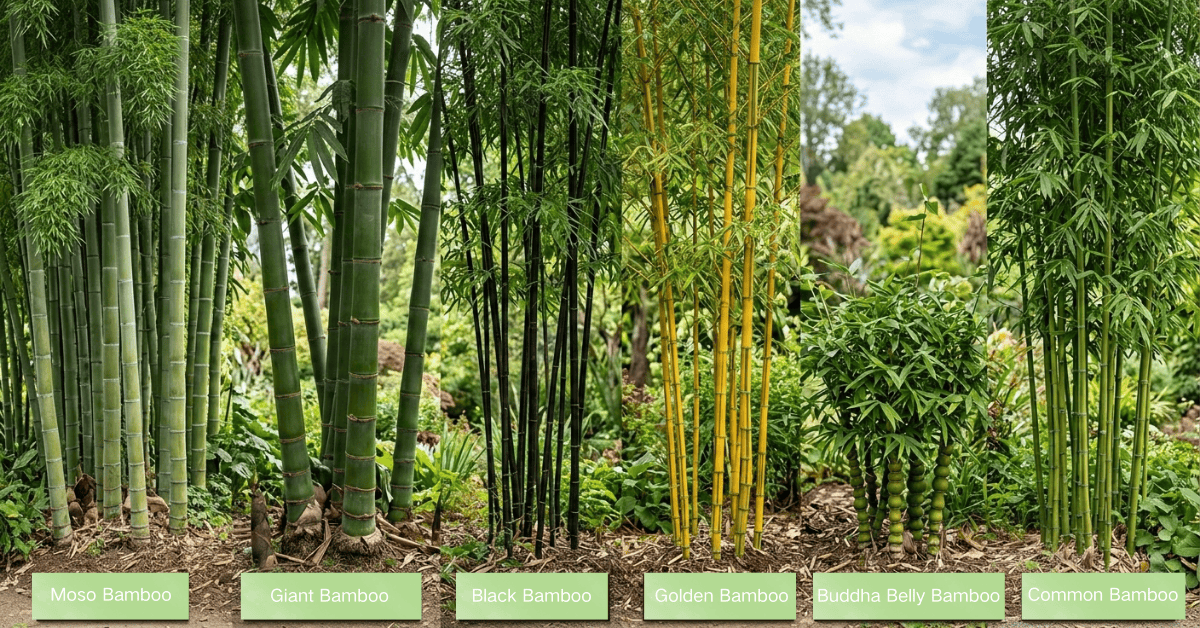
Bamboo has many species and varieties, which differ in size, colour, thickness and strength.
Some common types include Moso Bamboo, Guadua Bamboo, Golden Bamboo, and Bambusa Bamboo.
Different types are used for construction, furniture, crafts, flooring and interior products.
Processing
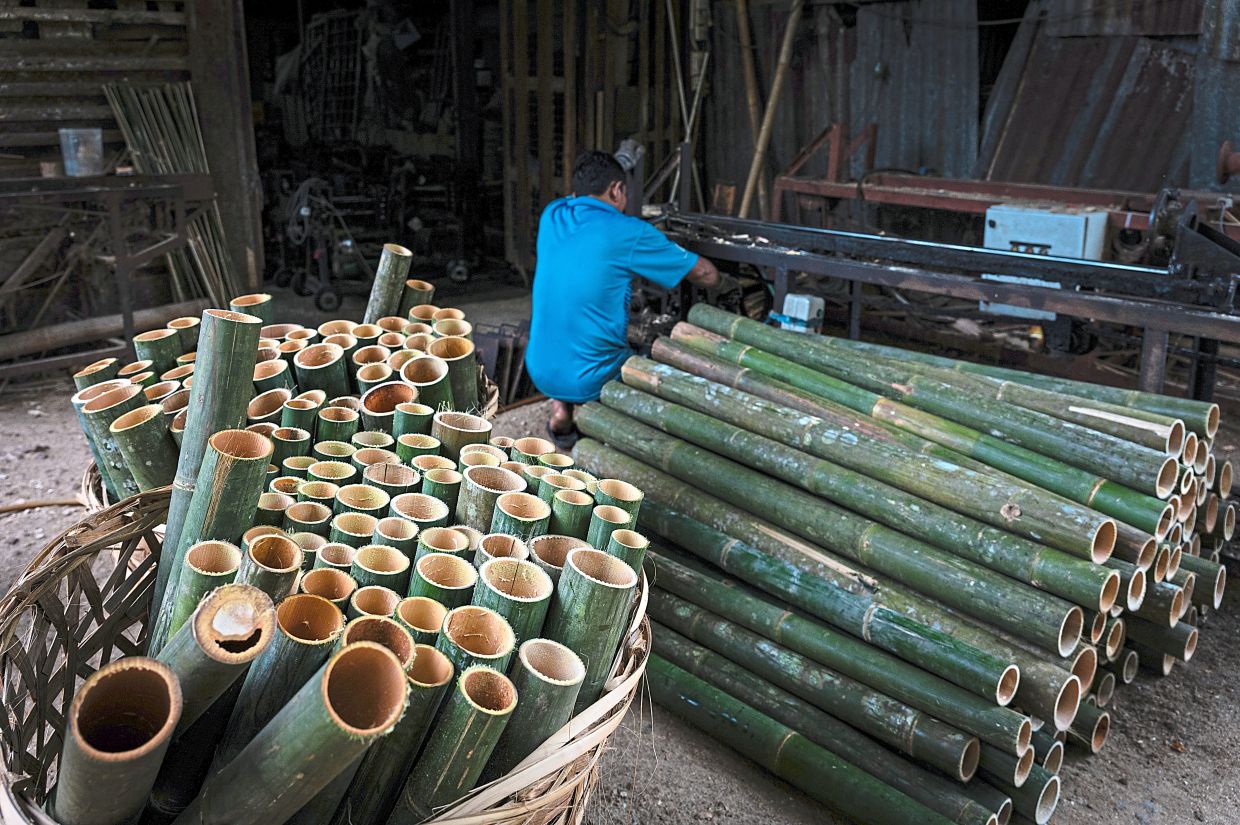
Bamboo is first harvested when it reaches the right maturity.
The stems are then cleaned, cut and dried to remove moisture.They may be treated to prevent insects and decay.
After treatment, bamboo is split, shaped, bent, woven or pressed
into different forms.
(Image source:thestar)Finally, it can be finished and made into furniture, flooring,
panels, baskets and other products.
Uses
Bamboo is used in construction, furniture, interior design, handicrafts, agriculture and everyday products.
It can be made into chairs, tables, baskets, mats, lamps, flooring, wall panels and partitions.
It is also used for roofs, bridges, scaffolding and structural elements.
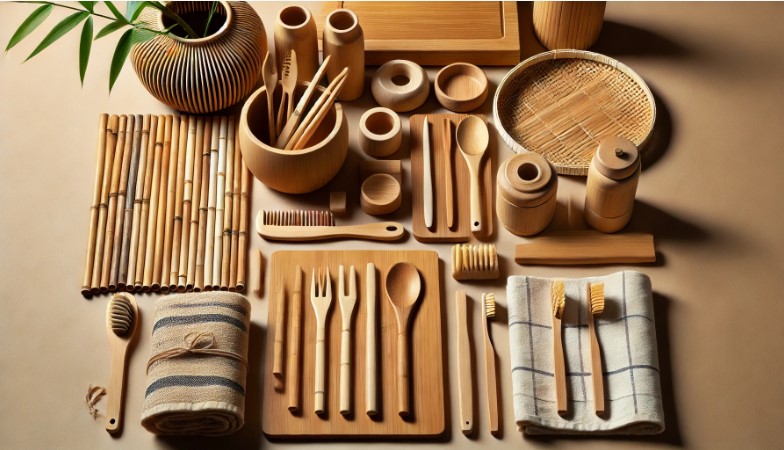
In daily life, bamboo is used to make kitchenware, storage items, tools, musical instruments and decorative objects.
Bamboo can be made into a wide variety of products such as furniture, baskets, mats, lamps, flooring, wall panels, partitions, kitchenware, storage items, toys, handicrafts and decorative objects.
It is also used to make musical instruments, bicycles, scaffolding and construction materials.
Bamboo is a plant, but it can be harvested without killing the entire plant.
Unlike many trees, bamboo can grow again from its existing root system after mature stems are cut.
It also grows very quickly, allowing it to be harvested more frequently
than many types of timber.
Because of this, bamboo can be a renewable and sustainable material when it is grown and harvested responsibly.
Using bamboo more often can help reduce dependence on some slower-growing materials.
Bamboo is also a relatively affordable material, making it accessible for both traditional crafts and modern design products.
Advantages and Limitations
Advantages
-
Strong and lightweight
-
Flexible and easy to shape
-
Fast-growing and renewable
-
Relatively affordable
-
Natural and attractive appearance
-
Useful for furniture, construction and interiors
Limitations
-
Can be affected by moisture and insects if not treated properly
-
May crack or split if poorly processed
-
Requires proper drying and treatment
-
Quality can vary depending on the species
-
Not suitable for every climate or application
Conclusion
Bamboo is a strong, useful and affordable natural material that can be used in many ways.
When it is properly harvested, treated and protected, it can last for a long time.
Since bamboo can grow again from its existing roots after harvesting, it can be a sustainable choice without causing unnecessary harm to the environment.
Its versatility and renewable nature make it a valuable material for future design and everyday use.


 (Image source:Hair-Products)




Comments
Post a Comment